An engraved cutting board is two things at once: a working kitchen surface and a keepsake with a name, a wedding date, or a hand-drawn design cut into its face. Caring for it well means protecting both the wood and the engraving, and the two goals do not always pull in the same direction. A little routine keeps the board flat, food-safe, and sharp-looking for years, while a few common habits will dull the detail or crack the wood in a single season.
Wash by hand, and keep it out of the dishwasher
Hand washing is not optional for a wood board. Use warm water, a little mild dish soap, and a soft sponge or cloth, then rinse and dry the surface immediately with a towel. After that, stand the board on its edge so both faces finish drying at the same rate. The single most common way a board warps is drying on one side only, whether that is lying flat on a wet counter or sitting in the bottom of a sink. Wood cups toward the side that dries first.
Never submerge or soak the board, and never run it through the dishwasher. Wood is porous; prolonged contact with water swells the fibers, and then the wood shrinks unevenly as it dries, which is what opens splits along the grain. A dishwasher stacks the problem higher by adding sustained heat and harsh detergent to that water, and the result is warping, raised grain, and cracking. Many manufacturers, including well-known butcher-block maker John Boos, explicitly void their warranty on any board that has been through a dishwasher.
Cut on the back, and save the engraved face for show
Most engraved boards carry the design on one face and leave the other plain. Treat the engraved side as a presentation and serving surface, and do your real chopping on the plain back. Dragging a knife across an engraved monogram slowly flattens the crisp edges of the lettering, and once that detail is gone it cannot be brought back without re-engraving. When you clean the engraved side, skip abrasive scrub pads and steel wool; those act like sandpaper on the fine lines. A soft brush is enough to clear crumbs out of the grooves.
Storage matters here too. Do not leave the board resting engraved-face-down on a damp counter, because trapped moisture can blur the fine lines and darken the wood around them. Stored upright with air on both sides, an engraved face stays legible for the life of the board.
Oil it on a schedule, and use the right oil
Wood loses moisture over time, and dry wood is what cracks. Oiling replaces that moisture, keeps the surface water-resistant, and deepens the grain so the engraving reads clearly. The workhorse product is food-grade mineral oil: inexpensive, odorless, and chemically stable so it will not spoil. A board cream or board butter, which blends mineral oil with beeswax and sometimes carnauba wax, adds a thin surface layer that beads water and leaves a soft sheen; it works best applied as a topcoat after the oil has soaked in.
Do not reach for the oils in your pantry. Olive, vegetable, corn, peanut, and walnut oils are fats that oxidize and eventually go rancid, leaving a sticky film and a sour smell that is very hard to remove. Skip ordinary non-food-grade mineral oil from the hardware aisle as well, since it is not intended for food contact. When it comes to how often to oil, a widely used rule of thumb is weekly for the first month and then roughly monthly after that, or simply whenever the surface starts to look pale, feels rough, or stops beading water.
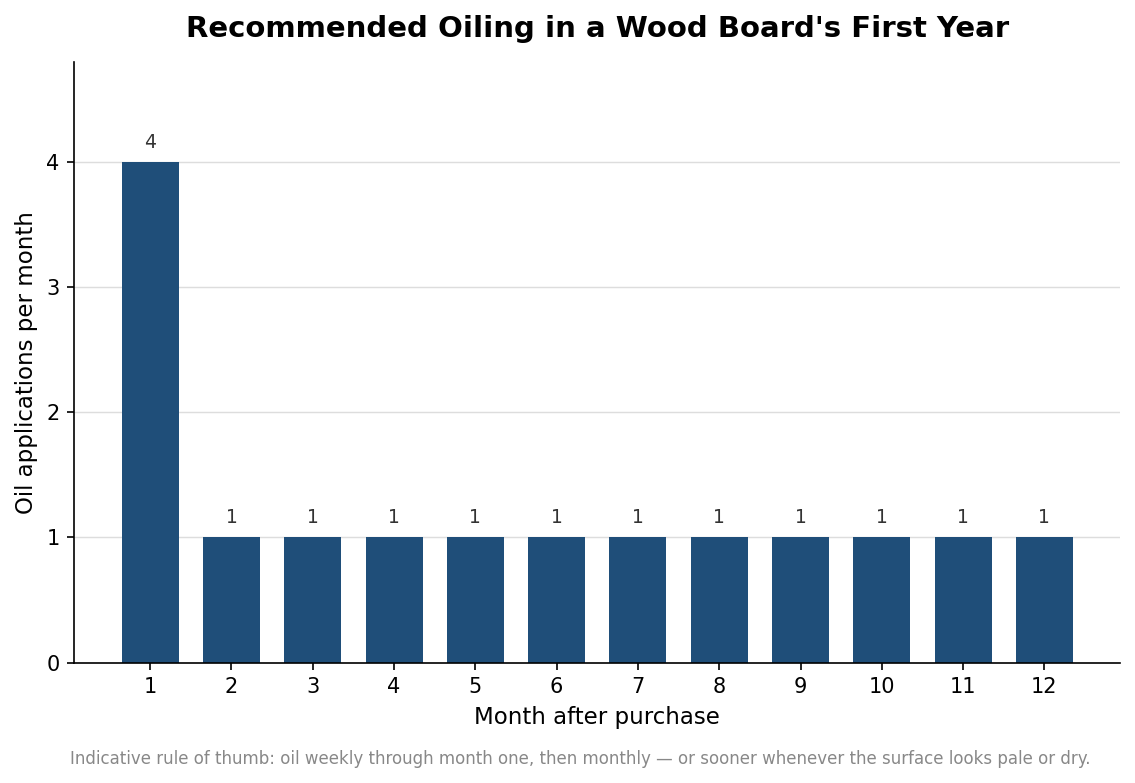
Application is straightforward. Pour a generous amount onto a cloth and spread it across the whole board, then work extra oil into the engraved grooves specifically, since the cut fibers there are exposed end grain that drinks in more and benefits from the seal. Let the oil soak in for at least a few hours, and overnight if you can, before wiping off whatever has not absorbed. A very dry board, or one you are restoring, can take the treatment two or three times in a row.
Refresh the finish and clear stains and odors
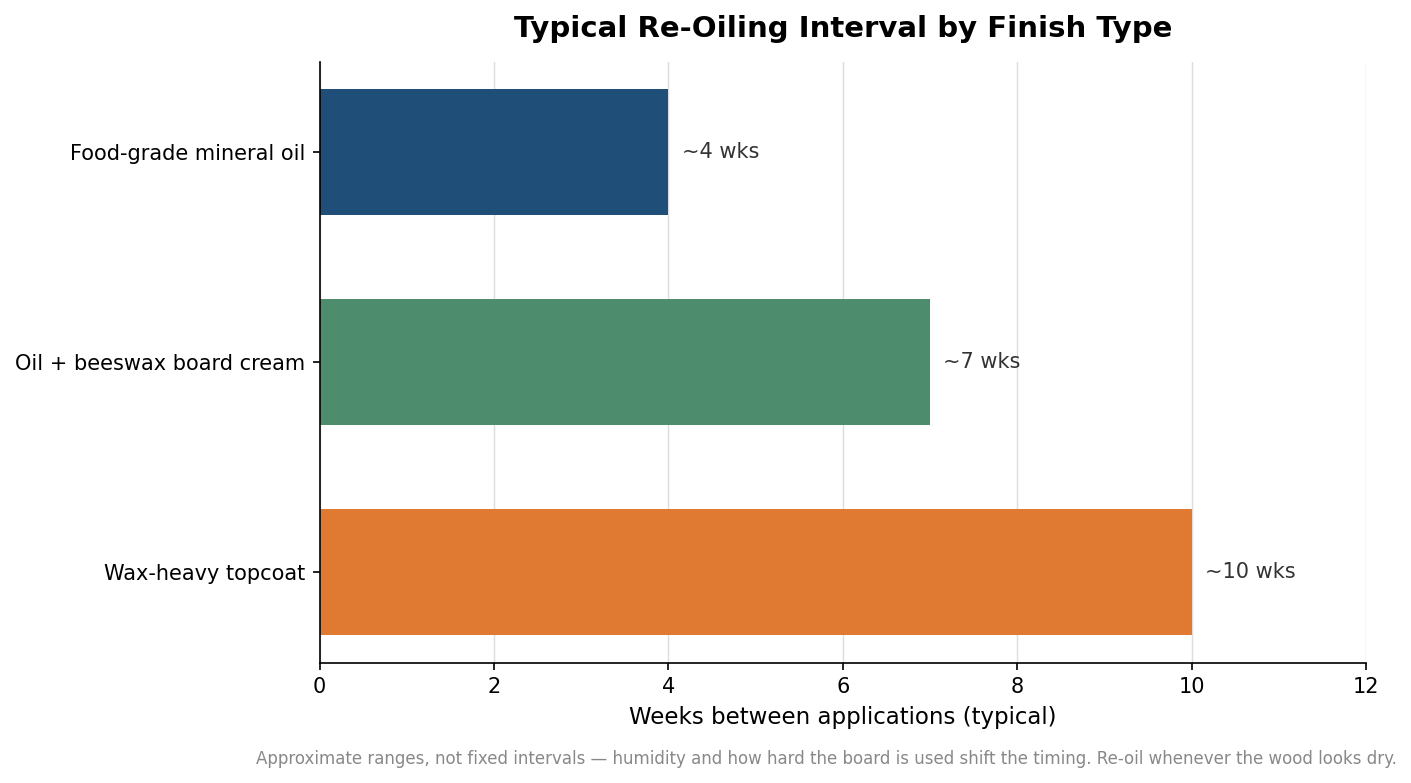
How often you re-oil depends on the finish you use. Plain mineral oil sinks in and needs redoing about monthly under normal use, while an oil-and-beeswax board cream partly sits on the surface and stretches the interval a little further. A wax-heavy topcoat lasts the longest between coats, though it still relies on oil underneath to keep the core of the wood from drying out. The figures below are typical ranges rather than fixed deadlines.
For stains and food odors, reach for the kitchen rather than a chemical. Scrubbing the surface with coarse salt and the cut face of a lemon lifts light stains and neutralizes smells; a wipe of white vinegar handles lingering odor and helps sanitize; and a paste of baking soda and water works on stubborn marks. Rinse, dry the board right away, and re-oil once it is fully dry, because any of these cleanups strips a little of the protective oil.
Reviving a tired board, and knowing when to stop
A board that has gone gray, rough, or lightly scratched on the working face usually comes back to life with a light sanding at around 220 to 320 grit followed by a fresh round of oil. Confine that sanding to the plain back; never sand the engraved face, or you will erase the design you paid for. Deep knife scoring on the back sands out the same way. The board is genuinely past kitchen duty only when there are cracks running clear through it, dark mold living inside a split, or a warp pronounced enough that it rocks and will not sit flat. Short of that, treat the engraving as the one part you cannot replace and the wood as fully maintainable, and a good board will outlast the occasion it was made for.